
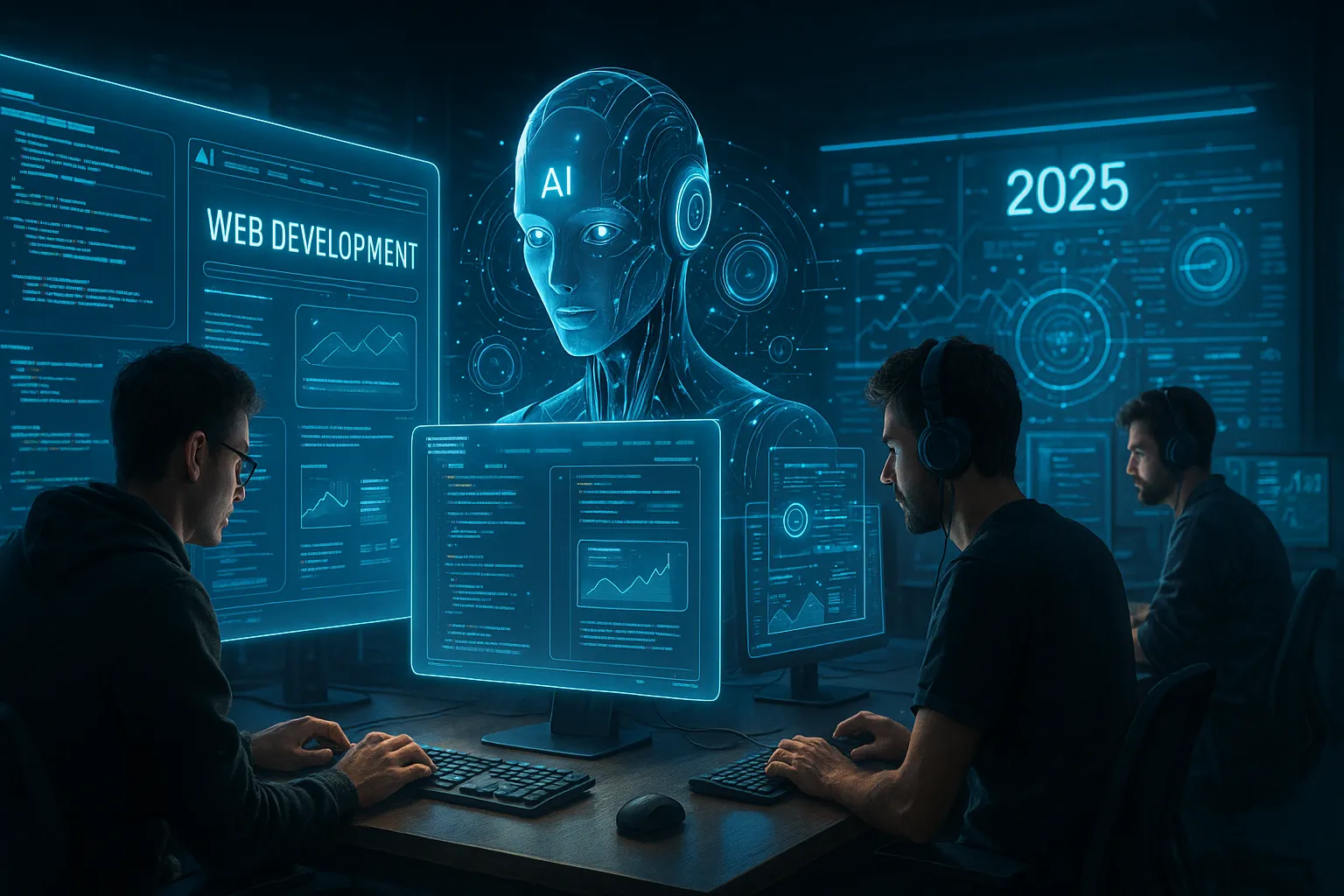
2025 New Trends Web Dev: What’s Changing and How Modern Website Development Is Evolving Fast
As we step into a new digital era, the 2025 new trends web dev landscape is reshaping how businesses, creators, and brands build their online presence. This is not just another list of predictions—these are structural shifts influencing everything from performance to design to automation. If you’re a freelancer, entrepreneur, or developer, understanding these trends in website development will help you stay competitive and relevant in a rapidly-changing market.
The world of modern website development is becoming smarter, faster, and more automated. Tools are evolving, users are expecting more, and technology is pushing the limits of creativity and functionality. Whether you’re building a small business website or a complex web app, the 2025 new trends web dev landscape is setting new expectations that you simply cannot afford to ignore.
In this comprehensive guide, you’ll discover the biggest breakthroughs shaping websites in 2025—AI-driven development, headless architecture, ultra-personalization, next-gen UI frameworks, cybersecurity advancements, and more. These trends in website development will transform everything from how websites are built to how users interact with them, helping you future-proof your approach and deliver results that stand out.
Let’s explore what’s new, what’s evolving, and how you can take full advantage of the 2025 new trends web dev revolution.
AI-Driven Development Is Becoming the New Standard
The most impactful shift in the 2025 new trends web dev landscape is the rise of artificial intelligence in the development workflow. AI tools are no longer experimental—they are now essential and deeply integrated into how websites are designed, developed, tested, and optimized. These innovations are reshaping modern website development by enhancing speed, quality, and consistency.
AI-powered coding assistants now help developers write cleaner code, reduce bugs, and accelerate project timelines. Meanwhile, machine-learning-based website builders can generate entire layouts, suggest conversions-boosting optimisations, and even automate content creation. As a result, these tools are redefining the future of trends in website development by enabling teams to focus more on strategy and creativity rather than technical complexity.
AI is also improving the user experience. From predictive search to adaptive interfaces and real-time personalisation, the 2025 new trends web dev ecosystem is using data to tailor websites to user behaviour. This guarantees smoother interactions, faster load times, and smarter navigation across all devices.
As AI becomes increasingly accessible, even non-developers can build professional-level websites. This democratisation is one of the most powerful shifts in modern website development we’ve ever seen.
Headless and Decoupled Architecture Take Over
Another major shift shaping 2025 new trends web dev is the rapid adoption of headless infrastructure. Instead of relying on traditional monolithic platforms, modern teams are choosing headless setups to achieve more flexibility, speed, and scalability. This approach separates the front end from the back end—giving developers the freedom to build dynamic user interfaces without being restricted by backend constraints.
This is transforming modern website development as businesses now demand multi-platform experiences. Headless architecture allows one backend system to serve websites, apps, smart devices, and future interfaces from the same content repository. Because of this, it has quickly become one of the dominant trends in website development heading into 2025.
Brands love headless because it supports lightning-fast performance and high design creativity. Developers love it because it offers better maintainability, stronger security, and the flexibility to use frameworks such as React, Vue, and Svelte on the front end. These advantages make headless systems a leading force in the 2025 new trends web dev ecosystem.
As user expectations grow more complex, headless architecture will become the default approach for both small and enterprise-level websites.
Ultra-Fast Performance Through Edge Computing
Speed is one of the most important ranking and UX factors, and thanks to new technologies, websites in 2025 are expected to load almost instantly. Edge computing is a major driver behind this shift and is now a core part of the 2025 new trends web dev movement.
Edge networks distribute content across thousands of global servers, allowing websites to load closer to the user. This dramatically reduces latency and improves performance—even for sites with heavy media or complex front-end components. As the web grows more competitive, faster performance has become an essential component of modern website development.
With Google prioritising speed and user experience, websites using edge-powered CDNs outperform traditional servers. This evolution continues to define the trends in website development in 2025, especially for global brands, ecommerce stores, and content-heavy platforms.
Edge computing doesn’t just improve speed—it boosts reliability and reduces downtime, making it one of the most influential 2025 new trends web dev that developers need to adopt.
Web Accessibility and Inclusion Become Mandatory
The web is becoming more inclusive, and accessibility is no longer optional. In the 2025 new trends web dev era, accessibility is built into the development process, not added afterward. With new regulations emerging across the globe, businesses must comply with accessibility standards or risk penalties.
Tools powered by AI can now identify accessibility issues in real time, helping developers build sites that are usable by all individuals. This shift towards inclusivity is redefining modern website development practices and pushing companies to prioritise equal access.
Accessible design improves readability, navigation, colour contrast, and screen reader compatibility. These principles are becoming central to the core trends in website development because they directly impact engagement, reach, and usability.
As accessibility becomes deeply integrated into frameworks and CMS platforms, it will remain one of the most permanent and ethical 2025 new trends web dev changes.
Future-Focused UI Frameworks and Micro-Interactions
Design trends are changing fast, and in the 2025 new trends web dev environment, users expect seamless, intuitive, and visually dynamic experiences. New UI frameworks are enabling developers to build more interactive websites without sacrificing speed or stability.
Micro-interactions, subtle animations, and immersive visual elements are now central parts of modern website development. These enhancements make interfaces feel more responsive and alive, giving users immediate feedback as they interact with elements on the page.
The focus is shifting from “design that looks good” to “design that feels good.” This emphasis on fluid UX is one of the most expressive trends in website development, helping brands stand out through motion design, story-driven UI, and interactive components.
As technology improves, these micro-effects can be implemented without heavy scripts, making them a lasting trend in the 2025 new trends web dev scene.
Cybersecurity and Zero-Trust Architecture
As cyber threats continue to rise, the 2025 new trends web dev landscape places major emphasis on security-first development. Websites need stronger data protection, safer authentication systems, and more resilient infrastructures to protect users and businesses from attacks.
Zero-trust architecture—where no device or user is automatically trusted—is becoming a foundational part of modern website development. This prevents breaches with real-time verification and continuous monitoring. It is also vital for ecommerce platforms, financial services, and personal data applications.
These heightened security measures are among the most essential trends in website development because they ensure compliance and protect against increasingly sophisticated threats. Encryption, biometric verification, and token-based authentication are becoming standard features.
Cybersecurity is no longer added at the end of a project; it defines the structure of the entire 2025 new trends web dev build.
Search and Navigation Transform Through Voice and Generative AI
One of the most exciting 2025 new trends web dev predictions is the evolution of how users search and navigate the web. Voice search, AI chat interfaces, and predictive navigation are replacing traditional menus and search bars.
AI-powered chat widgets now assist users instantly, offering personalised recommendations, support, and product suggestions. This is reshaping modern website development and allowing brands to give 24/7 assistance without increasing staffing costs.
These innovations mark a major shift in trends in website development, where natural language processing and conversational technology create more intuitive interactions. Websites are beginning to feel more like intelligent companions than static pages.
With the widespread use of smart devices, voice-enabled navigation is becoming a key part of the 2025 new trends web dev focus for accessibility and convenience.
Detailed Table: Key 2025 Web Development Trends Overview
| Category | Details |
|---|---|
| AI in Development | Automated coding, testing, UI design, and personalization. |
| Headless Architecture | Decoupled systems, multi-device content delivery, flexible UIs. |
| Edge Performance | Ultra-fast loading using distributed global servers. |
| UI Micro-Interactions | Subtle motions and animations that enhance UX. |
| Zero-Trust Security | Continuous authentication and enhanced cybersecurity protocols. |
Authoritative Resources
According to Forbes, AI-driven automation will shape nearly every digital industry by 2025, including web development.
Reports from Google Developers confirm that website performance, user experience, and edge technology will be essential ranking factors moving forward.
Progressive Web Apps and Offline Experiences
PWAs continue to dominate the 2025 new trends web dev conversation. They combine the power of native apps with the flexibility of websites. This is one of the most impactful trends in website development because users now expect fast, app-like responsiveness—even when offline.
PWAs offer instant loading, push notifications, offline caching, and smoother user journeys. This technology is redefining modern website development, especially for ecommerce brands and service providers looking to improve conversions.
As PWAs gain widespread adoption across industries, they will remain a staple of the 2025 new trends web dev model.
They are easy to maintain, cost-effective, and deliver a superior user experience—three reasons behind their soaring popularity.
3D Graphics, AR & VR Integration
Digital experiences are becoming more immersive, and in the 2025 new trends web dev era, 3D elements, augmented reality, and virtual reality are widely integrated into websites. These technologies make online interactions richer and more engaging.
From virtual product try-ons to interactive 3D models and immersive storytelling, these features are taking modern website development to new creative heights. Users want hands-on digital experiences, and brands that deliver them stand out immediately.
This surge is one of the most exciting trends in website development because it allows businesses to create memorable online journeys. With modern devices supporting these technologies, the adoption rate is skyrocketing.
3D and AR experiences will continue to expand within the 2025 new trends web dev ecosystem as demand grows for visually engaging digital experiences.
Low-Code and No-Code Tools Empower Non-Developers
One of the most democratising advances in the 2025 new trends web dev space is the growth of low-code and no-code platforms. These tools allow people without technical expertise to build fully functional websites and applications.
This revolution is reshaping modern website development by accelerating workflows and reducing development costs. Businesses can build prototypes, landing pages, and apps faster than ever with intuitive drag-and-drop editors and automation tools.
Low-code solutions are becoming central to the trends in website development because they empower non-technical professionals to participate directly in the creation process.
This shift ensures that no-code tools will remain critical in the 2025 new trends web dev landscape for business owners, marketers, and designers.
Eco-Friendly Web Development & Green Hosting
The digital world is taking sustainability seriously, and this is influencing the 2025 new trends web dev ecosystem. Eco-friendly hosting platforms, energy-efficient coding practices, and sustainable design are becoming industry norms.
Green hosting providers run on renewable energy, while developers optimise websites to consume fewer resources. This shift is gradually becoming part of modern website development because both users and businesses value ethical digital solutions.
Environmentally-conscious decisions are now among the most respected trends in website development as organisations prioritise responsible online operations.
The push for sustainability ensures that green technologies play a major role in the 2025 new trends web dev discussion.


Frequently Asked Questions (FAQ)
1. What are the biggest 2025 new trends web dev changes businesses should prepare for?
The biggest changes within the 2025 new trends web dev movement include AI-driven development, headless architecture, edge computing, zero-trust security, and more personalised user experiences powered by machine learning. These innovations are reshaping how websites are built, tested, and optimised. Businesses should prepare for faster load speeds, more intelligent automation, and customers who expect seamless navigation across devices. This shift also means teams must rethink traditional workflows and embrace modern website development tools to stay competitive. Because users engage differently in 2025, brands must also focus on trends in website development like accessibility, voice navigation, and immersive visuals to ensure that online experiences remain engaging and relevant.
2. Why is AI becoming essential for modern website development?
AI plays a central role in the 2025 new trends web dev landscape because it helps automate coding, content generation, error detection, user behaviour tracking, and UX improvement. For developers, AI reduces repetitive tasks, speeds up delivery, and ensures fewer bugs. For businesses, it improves accuracy and gives real-time insights into what users need. This evolution is one of the most exciting shifts in modern website development because it allows websites to adapt to user patterns dynamically. As part of the growing trends in website development, AI-powered design tools and chat interfaces are becoming mainstream, helping teams create personalised, intelligent digital experiences at scale.
3. How does headless architecture fit into the 2025 new trends web dev movement?
Headless architecture is one of the most transformative components of the 2025 new trends web dev shift. It separates the front end from the back end, offering unmatched flexibility, faster deployment, and the ability to deliver content across websites, apps, and IoT devices. This approach fits perfectly into modern website development because design teams can update the interface without touching the backend. Developers love its modularity, and businesses appreciate the improved performance and scalability. It’s also a major player in current trends in website development because it supports multi-channel experiences, which users now expect as standard in 2025.
4. What role does edge computing play in the future of web performance?
Edge computing is now a foundational element of the 2025 new trends web dev ecosystem because it dramatically improves speed and reliability. Instead of relying on a single server, edge networks deliver content from a global network of distributed servers, reducing latency and ensuring near-instant loading. This is increasingly crucial for modern website development, where users demand lightning-fast experiences regardless of location. As part of evolving trends in website development, edge computing supports a smoother UX for global audiences, ecommerce stores, and media-heavy websites. With the push toward speed-focused ranking signals, edge hosting is becoming essential rather than optional.
5. Why is accessibility a major focus in 2025 new trends web dev?
Accessibility is becoming mandatory because modern users expect inclusivity, and governments are increasingly enforcing digital accessibility laws. In the 2025 new trends web dev environment, accessibility is integrated into the design and development process from day one. This supports people with visual, motor, cognitive, and auditory challenges. The movement aligns with modern website development principles that prioritise equal access, better UX, and compliance with global regulations. As part of ongoing trends in website development, accessibility improvements include structured layouts, alt text automation, better colour contrast, and enhanced screen reader support, ensuring that every user can navigate and interact with websites more easily.
6. How will generative AI change user navigation and searching?
Generative AI is reshaping the 2025 new trends web dev space by introducing conversational navigation, predictive search, and voice-enabled browsing. Instead of clicking through menus, users can interact naturally with AI-powered assistants. This marks a major upgrade within modern website development as websites become more intuitive and personalised. AI analyses user behaviour to offer immediate results, recommendations, and support. As part of growing trends in website development, conversational interfaces are reducing friction, increasing conversions, and making digital interactions much more human-like. This technology will continue expanding across websites, apps, ecommerce, and service platforms throughout 2025 and beyond.
7. Why are micro-interactions becoming so important?
Micro-interactions—small animations and UI reactions—have become essential in the 2025 new trends web dev experience because they enhance usability and make websites feel more responsive. They give users feedback on actions like clicks, scrolls, submissions, and transitions, creating a smoother and more intuitive journey. They embody the heart of modern website development, which focuses on emotional design, accessibility, and meaningful engagement. As part of the latest trends in website development, micro-animations are lightweight, mobile-friendly, and can dramatically improve user satisfaction while keeping the interface playful and interactive. Their popularity will continue to grow as devices become faster and more capable.
8. Are PWAs still relevant in the 2025 new trends web dev world?
Absolutely. PWAs are more relevant than ever in the 2025 new trends web dev landscape because they combine web and app benefits without requiring app store downloads. PWAs load instantly, work offline, and support push notifications. They also reduce development cost and maintenance time, making them a perfect fit for modern website development strategies. As one of the strongest trends in website development, PWAs offer a smooth, app-like experience on any device and are especially valuable for ecommerce, news platforms, and service-based websites. Their speed, reliability, and usability will ensure they remain popular throughout 2025 and beyond.
9. How does zero-trust security improve website protection?
Zero-trust security is a cornerstone of the 2025 new trends web dev movement because it assumes that no user or device is trustworthy without verification. This reduces vulnerability to cyberattacks and protects data more effectively. Combined with biometric authentication, encryption, and token-based security, this model enhances modern website development practices. Among the most powerful trends in website development, zero-trust architecture provides continuous monitoring, early threat detection, and stronger control over user access. As cyber risks increase globally, this approach has become essential for protecting both user information and business operations online.
10. What new visual trends should designers focus on?
Designers should focus on immersive visuals, 3D graphics, AR features, and interactive storytelling—all major parts of the 2025 new trends web dev scene. These techniques create emotional, memorable user experiences. With improvements in rendering speed, mobile performance, and browser support, visual innovation is a major pillar of modern website development. As part of upcoming trends in website development, designers are also prioritising soft animations, bold typography, textured layers, and lightweight cinematic transitions. These elements allow websites to achieve a premium look and feel while keeping speed and usability intact.
11. Why are no-code and low-code tools becoming dominant?
No-code and low-code tools empower non-developers to build functional websites, giving them a big role in the 2025 new trends web dev revolution. These platforms speed up the creation of landing pages, prototypes, dashboards, and even full apps. This shift supports modern website development because businesses can reduce costs and shorten development cycles. As part of growing trends in website development, these tools democratise digital creation, allowing small businesses, marketers, and freelancers to participate without needing advanced coding skills. This trend will continue expanding in 2025 as platforms become more powerful and more integrated with AI.
12. What is the impact of sustainability on web development?
Sustainability is playing a major role in the 2025 new trends web dev movement. Eco-friendly hosting, minimalistic coding, and energy-efficient designs help reduce environmental impact. This shift aligns with modern website development values that prioritise ethical and efficient solutions. As digital carbon footprints gain attention, brands that embrace sustainability improve their reputation and trustworthiness. This direction has become one of the core trends in website development because consumers want businesses to act responsibly. Environmentally conscious development will continue growing as more companies prioritise green technology and sustainable online practices.
13. How will 3D and AR/VR change website experiences?
3D and AR/VR technologies are transforming the 2025 new trends web dev landscape by creating immersive, interactive digital experiences. Users can try products virtually, explore spaces in 3D, and interact with dynamic elements directly in their browser. This level of visual engagement pushes the boundaries of modern website development. These experiences enhance storytelling, increase conversions, and improve brand memorability. As part of emerging trends in website development, 3D and AR features are becoming easier to implement thanks to lightweight frameworks and hardware acceleration. These innovations will continue running parallel with creative marketing strategies throughout 2025.
14. How does voice search influence the 2025 new trends web dev environment?
Voice search is reshaping the 2025 new trends web dev ecosystem because users now expect hands-free, fast, and natural interactions. Websites must adapt by integrating voice commands, conversational search tools, and improved semantic structure. This shift enhances modern website development by making navigation more intuitive and accessible. As part of the evolving trends in website development, voice functionality supports users with disabilities, multitaskers, and mobile-first audiences. With AI improving accuracy and contextual understanding, voice search will continue to be a major UX enhancement in 2025.
15. What skills should developers learn to stay competitive in 2025?
Developers should focus on AI integration, headless CMS systems, edge hosting, cybersecurity, and modern JavaScript frameworks to remain competitive in the 2025 new trends web dev world. They should also upgrade their UX knowledge, accessibility compliance, and performance optimisation techniques. These areas define modern website development and reflect where the industry is heading. Staying updated with trends in website development gives developers an advantage in job markets, freelance platforms, and agency roles. The more they embrace automation, voice technology, and immersive design, the more prepared they will be for future standards.
Final Takeaway
The 2025 new trends web dev revolution is rewriting the rules of how the digital world works. With AI, headless architecture, voice navigation, immersive visuals, and stronger security, websites are becoming smarter, faster, and more user-centred than ever. Whether you’re a developer, business owner, or digital creator, embracing modern website development practices and staying aligned with emerging trends in website development will help you remain relevant and competitive. The future of the web is here — and it’s more powerful, innovative, and exciting than anything we’ve seen before.
If you want to read more Amazing Articles like this, Click Here.