Why The Best Ecommerce Homepages Matter
Picture this: You’re about to place an order for a new pair of sneakers online. You arrive at a certain store homepage. In a matter of about three seconds you find yourself either thinking “this seems to be trustworthy, let’s shop” or “nope, back to Google.” This is the impact the best ecommerce homepages have.
To businesses in the United States, a country where online shoppers have an abundance of choices, your homepage is not just a homepage. It’s your first impression, your virtual handshake, your welcome mat, and your attempt at making sure the visitor doesn’t leave. If a homepage fails to dazzle even for a moment, potential customers will leave faster than you can say “shipping is free.”
In this guide, I’ll show you:
- What makes the best ecommerce homepages truly effective.
- Real ecommerce website examples you can learn from.
- Actionable tips on ecommerce website design, conversion hacks, and how to make your site stand out.
| Aspect | Important Information |
|---|---|
| Purpose of a Homepage | The homepage of an ecommerce website serves as the storefront’s digital entry point. It sets first impressions, communicates the brand, and guides users to products. |
| Why It Matters | Studies show users form opinions in under 3 seconds. A well-designed homepage reduces bounce rates and boosts conversions significantly. |
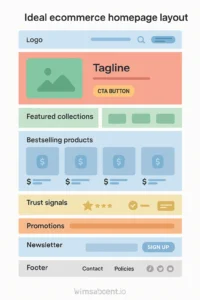
| Essential Elements | Clear value proposition, intuitive navigation, strong search function, featured products, trust signals (reviews, security badges), and compelling CTAs. |
| User Behavior (U.S.) | Over 60% of U.S. ecommerce traffic comes from mobile devices. Shoppers expect fast load times, clean layouts, and secure transactions. |
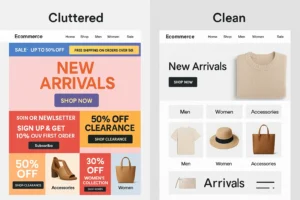
| Design Best Practices | Minimal clutter, use of whitespace, high-quality visuals, contrasting CTA buttons, and mobile-first responsive design. |
| Examples of Excellence | Apple (simplicity), Amazon (personalization), Nike (dynamic content), Glossier (community-driven), Allbirds (eco branding), Warby Parker (storytelling). |
| Trends in 2025 | Mobile-first approach, AI-driven personalization, AR/VR experiences, sustainable branding, and voice-search optimization. |
| Common Mistakes | Overloaded menus, weak CTAs, generic stock photos, ignoring mobile users, and slow site speeds. |
| Technical Priorities | Fast page load (<3 seconds), SEO-friendly structure (H1, H2 use), Core Web Vitals compliance, and secure HTTPS connections. |
| Impact on Sales | Strong homepages can increase conversion rates by 30–50%. Weak designs often result in abandoned sessions and cart abandonment. |
| U.S. Market Insight | Competition is fierce; U.S. buyers compare multiple sites quickly. Brand trust and smooth UX are decisive factors in purchase decisions. |
| Future Outlook | Ecommerce homepages will rely more on AI recommendations, hyper-personalized experiences, and ultra-fast mobile performance. |
What Makes the Best Ecommerce Homepages?
To comprehend the most effective features of ecommerce homepages, the most critical components must be established:
- Clarity – Visitors should immediately understand what the website sells.
- Trust – Confidence can be built through social proof, security badges, testimonials, and social proof.
- Navigation – Menus should be helpful and clear without oversaturating the users.
- Speed – The more than 5 seconds rule applies here. Anything more than 3 seconds lost conversions.
- Calls to Action (CTAs) – Statistically validated CTAs that can be clicked such as, “shop now” or “explore more” should be visible.
Visually, the homepage is like the polished, sleek front window of a boutique. It can be very telling when a window is msby down, jn, drvwdnw, or d rwcl s opl.
[Read more about ecommerce website design best practices.]
Examples of the Best Ecommerce Homepages in 2025
1. Apple – Simplicity That Sells
The Apple homepage is a clear example of the saying “less is more.” It undoubtedly displays simple yet effective features like: use of ample whitespace, large visuals, clean typefaces, and minimum word count to illuminate the products. The focus of the design is to espouse emotional storytelling, rather than clutter.
2. Nike – Personalization in Action
Nike is yet another company that utilizes dynamic content, geo-targeting, and personalized recommendations. Hereth with each visitor, personalized homepages show targeted products, seasonal campaigns, and limited time offers.
3. Warby Parker – The Integration of Storytelling and Design on the Headline of the Drop Page
Warby Parker has a website that features wit, a lifestyle component, and easy purchasing. It is on point. textbook good example of a ecommerce website.
👉 Want inspiration? Check Shopify’s roundup of sample ecommerce websites.
How to Create Store Website That Converts
If you’re wondering how to create store website that performs like these giants, here’s your roadmap:
Step 1: Choose the Right Platform
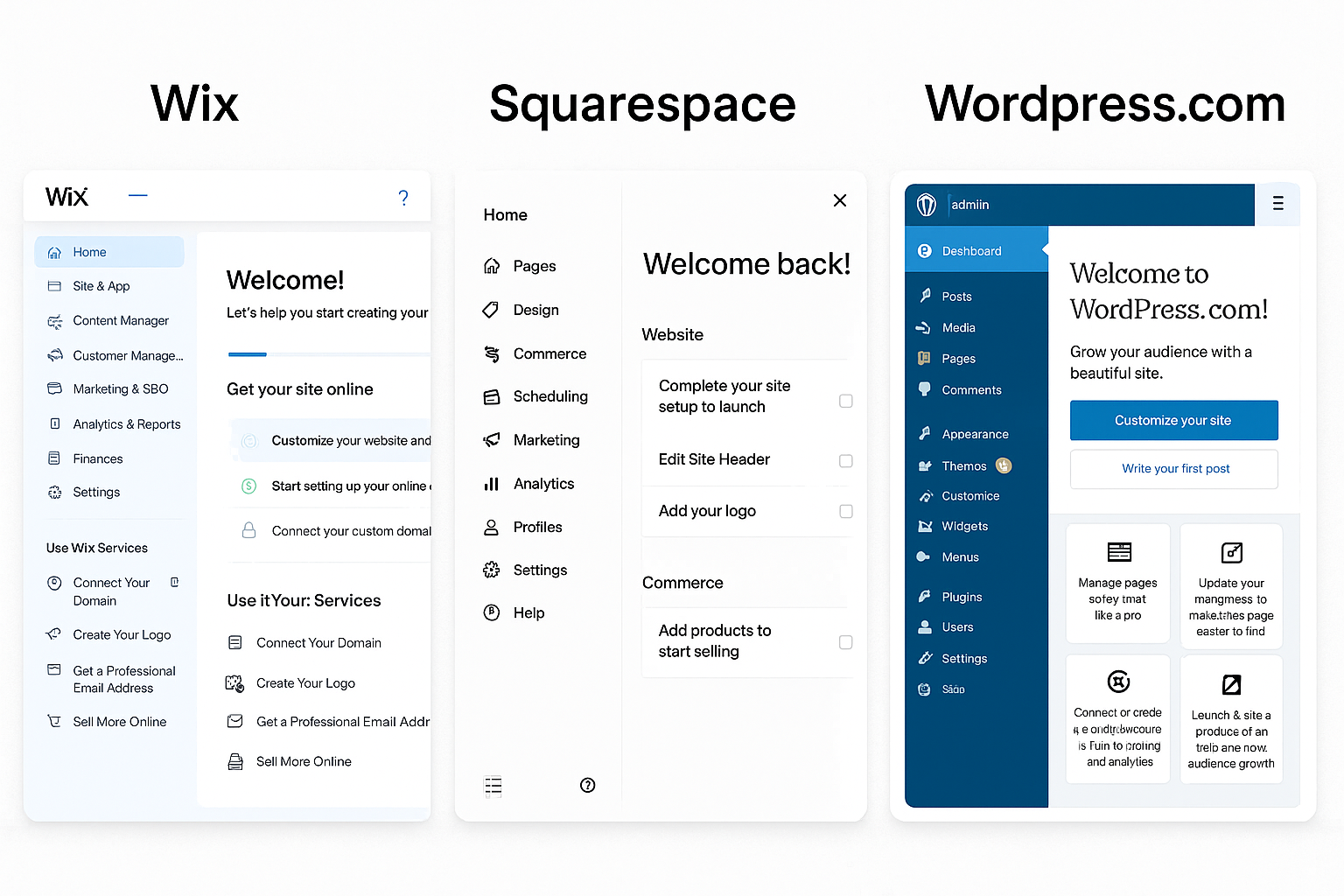
- Best free ecommerce website builder options: Shopify, Wix, WooCommerce.
- Online ecommerce platforms like BigCommerce or Squarespace work well for scaling.
Step 2: Focus on Design
- Prioritize best ecommerce design principles: minimal clutter, bold visuals, readable fonts.
- Use contrasting CTAs to guide users.
Step 3: Build Trust
- Add customer reviews, trust badges, and real photos.
- Example: “Over 10,000 U.S. customers trust us” creates instant authority.
Elements Every Best Ecommerce Homepage Needs
Here’s a checklist for creating the best designed ecommerce sites:
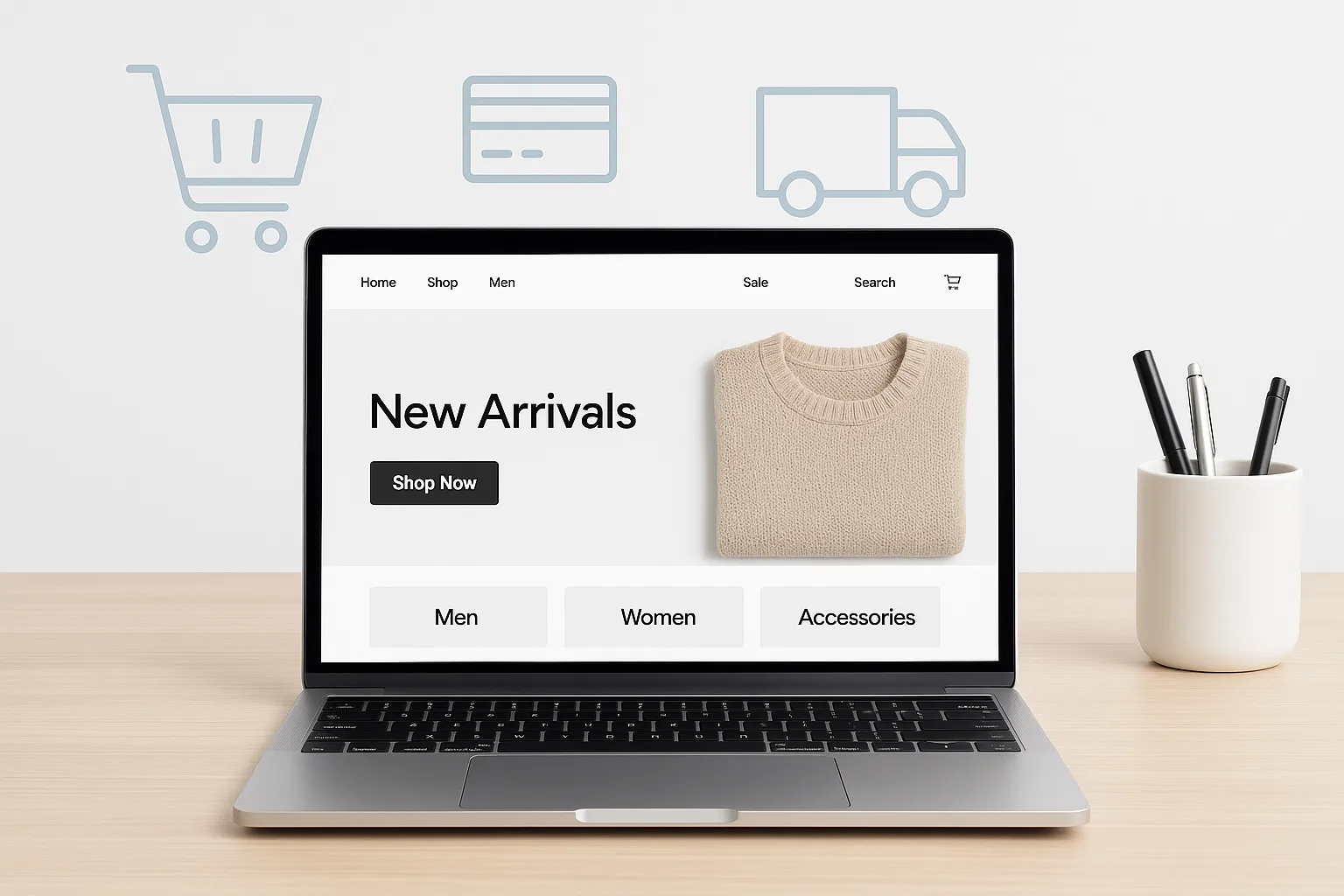
- Hero Section with clear value proposition.
- Navigation Bar with no more than 6 main categories.
- Search Functionality for quick access.
- Featured Products or Collections.
- Social Proof like testimonials, press mentions, or user-generated content.
- CTA Buttons in the first scroll.
Best Ecommerce Website Design Trends in the U.S.
U.S. shoppers in 2025 expect modern, sleek, and trustworthy designs. Let’s look at trends shaping the best ecommerce website design:
- Mobile-first ecommerce web design
- With 65% of U.S. shoppers buying via mobile, responsive design is non-negotiable.
- Interactive Elements
- Hover animations, quizzes, and product demos make sites memorable.
- AI-driven Personalization
- Platforms like Shopify now integrate AI to suggest products based on browsing history.
- Sustainable Branding
- U.S. consumers love eco-conscious electronic commerce sites that highlight values.
Table: Comparing the Best Ecommerce Homepages
| Ecommerce Website | Strength | Why It Works |
|---|---|---|
| Apple | Minimalist design | Lets products shine |
| Nike | Personalization | Builds stronger user connection |
| Warby Parker | Storytelling | Relatable brand voice |
| Allbirds | Sustainability | Appeals to eco-conscious buyers |
| Glossier | Community-driven | Leverages social proof |
How to Make Ecommerce Website for Free
Yes, you can build the best ecommerce homepages without breaking the bank. Here’s how:
- Use free online store with products to sell via platforms like Ecwid or Square.
- Learn how to make an ecommerce website for free with drag-and-drop editors.
- Add upselling and cross-selling tools to boost average order value.
[Check this guide on how to create online store website.]
Mistakes to Avoid in Ecommerce Website Design
Even if you study the best ecommerce homepages, avoid these pitfalls:
- Cluttered layouts → Confuse visitors.
- Weak CTAs → Low conversion rates.
- Stock photos only → Lack authenticity.
- Ignoring mobile users → Miss out on most of the U.S. market.

Future of Best Ecommerce Homepages in the United States
Looking ahead, best ecommerce homepages will evolve with:
- Voice search optimization – More shoppers asking Alexa/Siri for recommendations.
- Augmented Reality (AR) – Virtual try-ons becoming standard.
- Ultra-fast load speeds – Powered by next-gen hosting and CDNs.
Brands that stay ahead of these trends will dominate the U.S. ecommerce landscape.
Top 15 Frequently Asked Questions About Best Ecommerce Homepages
1. What makes the best ecommerce homepages stand out from average ones?
The best ecommerce homepages completely differ from average ecommerce homepages due to their striking balance of aesthetics, ease of use, and conversion elements. An effective homepage does more than just look inviting and attractive; it is able to communicate value without delay. The home page of an ecommerce site is meant to establish an immediate anchor of trust—within a matter of moments, users should be able to tell what is being sold, why it is different, and the means of purchasing it.
Smooth transitions in messaging, seamless navigation, and strong CTAs paired with trust elements — such as customer testimonials and secure checkout icons — all play a vital role. The best ecommerce homepages, unlike average ecommerce websites that overwhelm users with clutter and disorganization, are carefully designed to streamline the customer journey. A shopper should never, under any circumstances, feel lost on the site — whether browsing on mobile or desktop.
Apple and Amazon are prime examples of companies that showcase what the best ecommerce homepages can achieve. They capture user attention with bold visuals, simple yet effective menus, and smart customization. For small businesses, creating an ecommerce site with sample designs and a clean layout can go a long way in building credibility and improving conversion rates.
2. Why are ecommerce homepages so important for online stores?
The homepage of an ecommerce site is one of the most important and vital pages, serving as the brand’s online storefront. According to statistics, online shoppers are in a hurry and won’t hesitate to abandon a site that doesn’t appear trustworthy. This is why the design of the best ecommerce homepages is of utmost importance — they create a strong first impression, build trust, and encourage visitors to explore further.
Research shows that 55% of visitors leave a site within 15 seconds if it feels unappealing. The best ecommerce homepages are designed to combat this by reducing bounce rates, building trust, and laying the foundation for conversions. They showcase your brand’s best stories, highlight bestsellers, and guide shoppers deeper into the catalog for a seamless shopping journey.
Unlike blog posts or product pages, the homepage is multifunctional — it blends branding, navigation, promotions, and customer reassurance into a single experience. This is why optimizing your homepage is essential. Without a strong, engaging homepage, even the best products at the lowest prices may go unnoticed.
3. What design elements should every ecommerce homepage include?
The best ecommerce website design — and the best ecommerce homepages
-
Hero banner with a strong value proposition.
-
Navigation menu with easy-to-understand categories.
-
Search functionality for faster browsing.
-
Featured collections or bestsellers to showcase popular items.
-
Trust badges like SSL, payment options, and customer reviews.
-
Strong CTAs like “Shop Now,” “Explore Deals,” or “Subscribe.”
The best site design for ecommerce webpage homepages has to balance these elements with a lack of frustrating visuals and an absence of excessive popups.
As a best practice, make your homepage simple, clear, and easy to navigate on a mobile device. This will make the homepage very productive in turning first-time visitors into repeat customers.
4. How do U.S. consumers interact with ecommerce homepages?
In America, ecommerce customers place a high value on speed and trust. With over 60% of online purchases made on smartphones, the best ecommerce homepages are designed with a mobile-first approach. Shoppers expect intuitive navigation, clear promotional offers, and lightning-fast load times — ideally under three seconds — to keep them engaged and confident in their purchase.
Successful ecommerce platforms such as Nike and Zappos thrive because they deliver tailored shopping experiences. Features like personalized recommendations, geo-targeted offers, and loyalty programs make customers feel valued. In contrast, sites that lack the qualities of the best ecommerce homepages — those that are slow, uninspiring, or outdated — quickly drive U.S. consumers away to competitors.
Beyond showcasing products, the best ecommerce homepages tell a story, clearly communicate brand values, and build trust through positive customer reviews and transparent shipping policies.
5. Can you share examples of the best designed ecommerce sites?
Yes, here are some of the best ecommerce homepages recognized globally and particularly strong in the U.S. market:
-
Apple – Minimalist design that highlights products.
-
Nike – Personalized dynamic homepage.
-
Warby Parker – Storytelling and community-driven design.
-
Glossier – Uses UGC (user-generated content) for trust.
-
Allbirds – Eco-conscious branding with simple design.
-
Casper – Clean layout showcasing comfort and simplicity.
These examples show how diverse design strategies—minimalism, storytelling, or personalization—can all lead to high-performing ecommerce websites.
6. How to create online store website that rivals the best?
To create a homepage that can compete with the best ecommerce homepages, follow these steps:
-
Choose the right platform – Shopify, WooCommerce, or Wix are top picks.
-
Focus on design – Use templates optimized for ecommerce web design.
-
Highlight trust – Include reviews, secure payment logos, and guarantees.
-
Optimize for mobile – Over half of your traffic will come from phones.
-
Guide users with CTAs – Don’t make visitors guess what to do next.
Building a sample ecommerce website with free tools can be a starting point. But for long-term success, invest in professional design and SEO optimization.
7. What role does ecommerce web design play in conversions?
Ecommerce website design has a measurable effect of site conversion rates. An the stunning homepage beautified with aesthetically pleasing images, but difficult to navigate, definitely will not make a sale. The most effective ecommerce url design has the perfect combination of beauty and function—straightforward menu, vivid call-to-actions, mobile responsive pages, secure payment options.
A good ecommerce website lessens friction. If shoppers can’t see the cart button or it takes too long to load, they leave. In turn, brands with optimized designs have a 30–50% higher conversion rate when compared to poorly designed competitors.
8. What are common mistakes to avoid in ecommerce homepage design?
Mistakes that kill the effectiveness of even sample ecommerce websites include:
-
Cluttered layouts with too much text or imagery.
-
Weak or hidden CTAs.
-
Over-reliance on stock images instead of real photos.
-
Ignoring mobile users.
-
Slow loading times.
-
Too many pop-ups, which frustrate shoppers.
The best ecommerce homepages always prioritize simplicity, clarity, and speed. Avoiding these mistakes is as important as adding new features.
9. How can I make an ecommerce website for free?
It’s possible to create a basic ecommerce homepage at no charge with websites, such as, Ecwid, Square, and even a trial of Shopify. These no charge ecommerce website builder platforms offer a sample template they have.
The basic free versions still lack plenty of important fundamentals, such as, SEO, and even customization. It is a good starting point for beginners, but it is better for advanced businesses to invest in the tools that will offer better results.
10. How do trust signals improve ecommerce homepages?
Trust is everything in ecommerce. Even if you have the best ecommerce website design, users won’t buy unless they feel safe. Trust signals include:
-
SSL certificate (HTTPS).
-
Payment logos (Visa, PayPal, Apple Pay).
-
Customer reviews and testimonials.
-
Return/refund policies.
-
Social proof (Instagram feeds, UGC).
The best designed ecommerce sites always integrate these elements prominently on their homepage. They reassure first-time visitors and improve conversions.
11. How does personalization affect ecommerce homepages?
Personalization is one of the most important changes to how the best ecommerce homepages look. Nike and Amazon are well-known for AI-driven personalization, which determines which products, promotions, and recommendations to show to specific users.
This is important because tailored experiences have become an expectation of most US shoppers. Personalized ecommerce websites see sales and customer loyalty increase by 20% compared to generic websites. Even smaller businesses are able to implement personalization through Klaviyo and Shopify apps.
12. What technical SEO factors affect ecommerce homepage rankings?
Search engine optimization is vital for visibility. For the best ecommerce homepages to rank on Google, technical SEO must be strong:
-
Fast load times (<3 seconds).
-
Mobile-first design.
-
Optimized Core Web Vitals.
-
Proper heading structure (H1, H2 with keywords).
-
Clean URLs.
-
Schema markup for products.
Ignoring technical SEO means even a best ecommerce website design won’t reach U.S. buyers through search engines.
13. How do homepage visuals impact ecommerce success?
Visuals are storytelling tools. A sample ecommerce website with stock images feels generic, while a good ecommerce website with lifestyle photography feels trustworthy.
High-quality images and videos improve engagement. Interactive visuals like product try-ons or hover effects increase time on site. The best ecommerce design uses visuals not as decoration, but as conversion tools guiding buyers toward action.
14. How fast should an ecommerce homepage load?
Speed is non-negotiable. Google research shows that if a page takes longer than 3 seconds, over 50% of visitors leave. That’s why the best ecommerce homepages invest in speed optimization—compressing images, using CDNs, and reducing scripts.
In the U.S., where competition is fierce, a one-second delay can mean thousands of dollars in lost revenue. Speed isn’t just a ranking factor—it’s a conversion factor.
15. What’s the future of ecommerce homepages?
The future of best ecommerce homepages will be shaped by:
-
AI-driven personalization – Showing different homepages for each user.
-
Voice commerce – Optimized for Alexa, Google, and Siri.
-
Augmented Reality (AR) – Try-before-you-buy features on the homepage.
-
Sustainable branding – Highlighting eco-friendly practices upfront.
-
Ultra-fast performance – Powered by next-gen hosting and 5G speeds.
Brands that adapt to these trends will stay competitive in the U.S. market. The best ecommerce website design is never static—it evolves with consumer behavior and technology.
Conclusion: Build Your Best Ecommerce Homepage Today
Revenue machines more than just layouts define the best ecommerce homepages. Applying ecommerce web design best practices and studying Apple, Nike, and Warby Parker, you can turn your site into a powerhouse for conversions.
Whether you are using a best free ecommerce website builder or banking on custom design of e commerce website, bear in mind:
- Clarity + Trust + Speed = Conversions.
- Storytelling sells better than product specs alone.
- Every homepage is your chance to win or lose a customer.
Now it’s your turn. Audit your homepage, apply these strategies, and watch your sales grow. 🚀
👉 Have questions about how to build a web store or want more sample ecommerce website breakdowns? Drop a comment below—I’d love to hear your thoughts!
Want to dive deeper? Check out this guide: How to Start an Ecommerce Business