Clothing Stores on Shopify: The Ultimate Guide to Building and Scaling Your Apparel Brand
Have you ever considered monetizing your love for fashion? Clothing stores on Shopify appear to have simplified the process for entrepreneurs on the apparel brand online selling frontier. Shopify provides you the opportunity to sell your diverse products ranging from T-shirts to expensive gowns.
In this guide, we’ll delve into all the essential aspects necessary to successfully set up and expand your clothing store on Shopify. It doesn’t matter whether you are a novice entrepreneur with the aim of designer clothes or a seasoned retail professional, you are going to learn how to use Shopify to your advantage from dominatig the apparel market to making a successful Shopify store.
| Section | Key Points | Examples / Resources | Tips |
|---|---|---|---|
| Why Choose Shopify | User-friendly platform, drag-and-drop builder, strong integrations, scalable for U.S. apparel brands. | Shopify Features | Ideal for startups and established retailers. |
| Benefits | Scalable growth, PCI-compliant payments, SSL security, print-on-demand options. | Printful integration | Great for T-shirts, dresses, and activewear. |
| Must-Have Features | Mobile-friendly themes, high-quality images, size guides, integrated payments, cart recovery. | Themes: Prestige, Impulse | Always test designs on mobile devices. |
| Setup Steps | 1) Sign up for Shopify 2) Select a theme 3) Add products & sizing charts 4) Set up payments and shipping. | Shopify Help Center | Use clear product descriptions and HD photos. |
| Themes & Apps | Themes: Streamline, Motion. Apps: Klaviyo, Loox, Stocky. | Shopify App Store | Choose apps that automate reviews, email, and inventory. |
| Inventory & Sizing | Organize with SKUs, use sizing charts, manage stock with apps. | Stocky inventory app | Offer size guides to reduce returns. |
| Marketing | Email campaigns, Facebook/Google Ads, blogging about style tips. | Mailchimp, Google Ads | Post seasonal lookbooks on your site. |
| Social Media | Integrate Instagram Shopping, Facebook Shop, TikTok videos. | Shopify Social Integrations | Highlight user-generated content. |
| SEO | Use “clothing stores on Shopify” & “Shopify apparel stores” in headings and alt text. | Google Keyword Planner | Keep URLs short and descriptive. |
| Analytics | Monitor sales, customer behavior, product trends. | Shopify Analytics | Use data to improve promotions. |
| Case Studies | Gymshark, Allbirds, Fashion Nova. | Gymshark, Allbirds | Study their branding and checkout flow. |
| Common Mistakes | Low-quality photos, no clear return policy, slow loading speed. | PageSpeed Insights | Test your store’s speed and mobile view. |
| Trends | AI personalization, AR fitting rooms, eco-friendly packaging. | Shopify AR tools | Appeal to sustainability-conscious shoppers. |
| Final Tips | Focus on design, apps, and customer experience. | Shopify Free Trial | Keep testing new layouts and campaigns. |
1. Why Choose Shopify for Clothing Stores
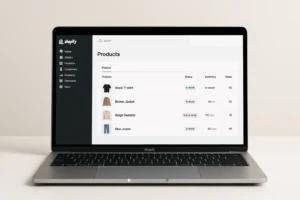
Onlinw sellers have greatly benefited from the new clothing stores on Shopify due to the ease of use Shopify provides its users. Shopify’s big point-and-click structure, along with its all-in-one functions, integrations, all features, and usability within the United States clothing industry make it the right choice.
For more information, explore Match Shopify’s official features and why it serves a trusted partner to all these brands.
2. Key Benefits of Clothing Stores on Shopify
Managing clothing stores on Shopify offers numerous benefits:
- Scalability: Begin at a low starting point and grow as the sales increase.
- Security: PCI-dedicated payments and SSL encryption.
- Flexibility: Sale of Physical, digital and print clothing is supported.
Shopify offers integration to Printful, which offers on demand clothing production.
3. Top Features Every Shopify Apparel Store Needs
To maximize sales, successful clothing stores on Shopify rely on:
-
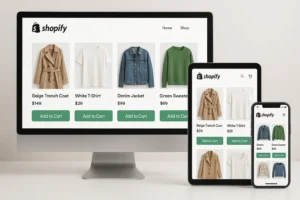
Responsive, mobile-friendly themes.
-
High-quality product images.
-
Size guides and fit information.
-
Integrated payment gateways.
-
Abandoned cart recovery.
4. Step-by-Step Guide to Setting Up Clothing Stores on Shopify
Step 1: Sign Up
Create your Shopify account and choose a plan suitable for clothing brands.
Step 2: Select a Theme
Opt for fashion-focused themes like “Prestige” or “Impulse.”
Step 3: Add Products
Upload product images, write engaging descriptions, and include sizing charts.
Step 4: Configure Payments & Shipping
Enable PayPal, Shopify Payments, and set up U.S.-based shipping zones.
For guidance, check Shopify’s help center.
6. Inventory Management and Sizing Tips
Accurate inventory and clear sizing are critical for clothing stores on Shopify:
-
Use SKU codes for organization.
-
Offer U.S. sizing charts with visuals.
-
Leverage inventory apps like Stocky.
7. Best Marketing Strategies for Clothing Stores on Shopify
Promote clothing stores on Shopify using:
-
Email Campaigns: Build loyalty through newsletters.
-
Paid Ads: Leverage Facebook and Google Ads.
-
Content Marketing: Blog about style tips or seasonal trends.
8. Integrating Social Media with Your Shopify Apparel Store
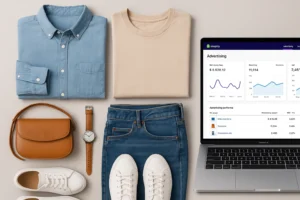
Social platforms are essential for clothing stores on Shopify:
-
Use Instagram Shopping to tag products.
-
Sync Facebook Shop with your inventory.
-
Experiment with TikTok videos to reach Gen Z.
Learn more about Shopify’s social integrations
9. SEO Best Practices for Shopify Clothing Stores
Optimizing clothing stores on Shopify is vital for ranking:
-
Use keywords like “Shopify apparel stores” naturally in headings.
-
Add alt text for product images.
-
Create descriptive URLs (e.g.,
/summer-dresses). -
Build backlinks from fashion blogs.
10. Using Analytics to Grow Clothing Stores on Shopify
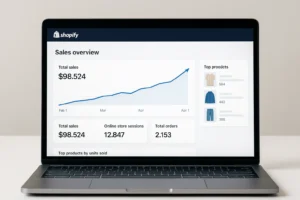
Shopify Analytics provides actionable insights:
-
Monitor sales by product or region.
-
Track customer behavior and repeat purchases.
-
Use reports to fine-tune marketing campaigns.
11. Case Studies: Successful Shopify Apparel Brands
Examples of thriving clothing stores on Shopify include:
-
Gymshark: Activewear built from a garage to a global powerhouse.
- Allbirds: Eco-friendly footwear with a minimalist store design.
- Fashion Nova: Trend-driven brand with strong influencer marketing.
12. Common Mistakes to Avoid
New clothing stores on Shopify often stumble by:
-
Using low-quality product images.
-
Neglecting return policies.
-
Failing to optimize site speed.
See Google PageSpeed Insights for speed optimization tips.
13. Future Trends in Clothing Stores on Shopify
The future of clothing stores on Shopify is shaped by:
-
AI-driven personalization.
-
AR-powered virtual fitting rooms.
-
Sustainable fabrics and eco-shipping.
Frequently Asked Questions About Clothing Stores on Shopify
Launching and running clothing stores on Shopify can feel overwhelming at first. To make things easier, we’ve compiled the most asked questions from our customers, complete with expert guidance.
1. What makes clothing stores on Shopify so popular?
Shopify offers an intuitive platform for apparel brands. Its drag-and-drop editor, integrated payment gateways, and scalability make it perfect for clothing stores on Shopify. Whether you sell streetwear or luxury outfits, Shopify’s features help you design, manage, and market your store with ease.
Check out Shopify’s official features to learn more.
2. How do I set up clothing stores on Shopify from scratch?
To create a Shopify apparel store:
-
Sign up for Shopify’s free trial.
-
Pick a theme like Prestige or Streamline designed for fashion.
-
Add products, descriptions, and size charts.
-
Configure payments, taxes, and shipping for U.S. buyers.
Following these steps ensures your clothing stores on Shopify start strong.
3. What are the best themes for Shopify apparel stores?
Top themes for clothing stores on Shopify include:
-
Prestige: Great for luxury brands.
-
Impulse: Ideal for lifestyle fashion.
-
Motion: Clean design for activewear.
These themes focus on high-quality visuals and fast loading, essential for Shopify apparel stores.
4. Which apps can boost sales for clothing stores on Shopify?
Popular apps include:
-
Klaviyo: For email marketing.
-
Loox: Collect and display photo reviews.
-
Stocky: Streamline inventory management.
These integrations help clothing stores on Shopify improve customer trust and retention.
5. How should I handle inventory for Shopify apparel stores?
Efficient inventory is crucial:
-
Use SKU codes to track stock.
-
Add real-time quantity updates.
-
Offer clear U.S. sizing charts to reduce returns.
Many successful Shopify apparel stores automate stock control with apps.
6. How can I market clothing stores on Shopify effectively?
Marketing strategies include:
-
Running Facebook and Instagram ads.
-
Starting a blog about seasonal styles.
-
Building email campaigns for loyal shoppers.
For deeper insights, explore Shopify’s marketing tools.
7. What role does SEO play for clothing stores on Shopify?
SEO is critical for driving organic traffic. Use clothing stores on Shopify and Shopify apparel stores in titles, headings, and product descriptions. Add descriptive alt text for images and create clean, keyword-rich URLs.
8. How do I integrate social media with my Shopify apparel store?
You can connect:
-
Instagram Shopping to tag products.
-
TikTok catalog to reach Gen Z.
-
Facebook Shop for broader exposure.
These channels make clothing stores on Shopify visible across social platforms.
9. How do clothing stores on Shopify manage returns?
Offer a transparent return policy:
-
Accept returns within 30 days.
-
Provide pre-paid shipping labels.
-
Clearly explain conditions on your site.
This builds trust in your Shopify apparel stores.
10. What payment methods can I enable in my Shopify apparel store?
Shopify supports credit cards, PayPal, Apple Pay, and Shop Pay. Secure checkout options encourage customers to finalize purchases in clothing stores on Shopify.
11. How can I use analytics to improve clothing stores on Shopify?
Shopify Analytics tracks:
-
Sales by product and region.
-
Customer repeat purchase rates.
-
Marketing campaign performance.
Use these insights to optimize your Shopify apparel stores for growth.
12. What common mistakes should new Shopify apparel stores avoid?
Avoid:
-
Uploading low-resolution images.
-
Skipping mobile optimization.
-
Forgetting clear shipping rates.
Attention to detail keeps clothing stores on Shopify professional.
13. What trends will shape the future of clothing stores on Shopify?
Emerging trends include:
-
AI personalization for product recommendations.
-
AR try-ons for virtual fitting rooms.
-
Sustainable fabrics with eco-friendly shipping.
Keeping up with trends keeps Shopify apparel stores competitive.
14. How can I make my Shopify clothing store mobile-friendly?
Most Shopify themes are responsive, but you should:
-
Test your store on multiple devices.
-
Optimize images for fast loading.
-
Keep buttons and menus easy to tap.
Mobile-first design is key for modern clothing stores on Shopify.
15. Where can I find inspiration from successful Shopify apparel brands?
Check these examples:
-
Gymshark: Global activewear brand.
- Allbirds: Eco-friendly shoes and apparel.
- Fashion Nova: Trend-driven online boutique.
Studying these stores gives fresh ideas for clothing stores on Shopify.
14. Final Thoughts and Call-to-Action
Launching clothing stores on Shopify is an exciting opportunity for U.S. entrepreneurs. By choosing the right theme, leveraging apps, and focusing on customer experience, you can build a store that grows alongside your vision.
Ready to start? Visit Shopify’s free trial page and bring your apparel brand to life!
How to Start a Ecommerce Business: A Complete Beginner’s Guide