
Why Developing a Personal Development Plan Matters More Than Ever
Ever felt like you’re running in circles—working hard but not really moving forward? If so, you’re not alone. Most of us want to improve our lives, level up our careers, and feel more fulfilled, but we often lack a clear direction. That’s where developing personal development plan steps in to change the game.
In today’s fast-paced world, where goals shift rapidly and distractions are everywhere, developing personal development plan is not just a luxury—it’s a necessity. Whether you’re climbing the career ladder, looking to enhance your relationships, or striving for better mental health, developing a personal development plan gives you a structured approach to unlock your full potential.
In this article, we’ll show you exactly how to create a personal development plan, why it matters, and how to build one that actually sticks.
| Topic | What to Do | What to Avoid | Why It Matters |
|---|---|---|---|
| Goal Clarity | Set SMART goals (Specific, Measurable, Achievable, Relevant, Time-bound) | Vague goals like “be better” | Clear goals keep you focused and motivated |
| Self-Assessment | Use SWOT analysis to identify strengths and weaknesses | Skipping honest reflection | Knowing yourself is key to meaningful growth |
| Planning Format | Use a structured personal development plan template | Keeping everything in your head | Templates make it easier to track and adjust |
| Learning Resources | Choose relevant books, courses, mentors | Consuming random content without purpose | Focused learning saves time and builds skills |
| Progress Tracking | Set milestones and review progress monthly | Never revisiting your plan | Regular check-ins maintain momentum |
| Career Impact | Include your development plan in resumes or reviews | Keeping your efforts invisible | Demonstrates initiative and growth mindset |
| Mental Wellness | Add emotional and personal goals (journaling, mindfulness) | Focusing only on career achievements | Balanced goals promote long-term success |
| Time Management | Block out weekly time for personal development | Leaving growth for “when I have time” | Scheduled time turns intentions into habits |
| Flexibility | Adjust your goals and timeline as needed | Sticking rigidly to unrealistic plans | Adaptability helps you stay consistent |
| Accountability | Share your plan with a mentor or peer | Trying to go it completely alone | Support improves follow-through and clarity |
| Digital Tools | Use apps like Notion, Trello, or Google Calendar | Managing everything manually | Tools enhance organization and tracking |
| Mistake Avoidance | Celebrate small wins and course-correct often | Waiting for perfect conditions to begin | Progress starts with action, not perfection |
| Student Focus | Build foundational skills (public speaking, networking) early | Delaying development planning | Early planning leads to long-term career benefits |
| Motivation Strategy | Use vision boards, sticky notes, or rewards | Ignoring motivation cues | Visual cues and rewards sustain energy |
| Real-Life Application | Start a simple plan now—even if it’s one goal | Overcomplicating your first draft | Action builds clarity and confidence |
What Is a Personal Development Plan?
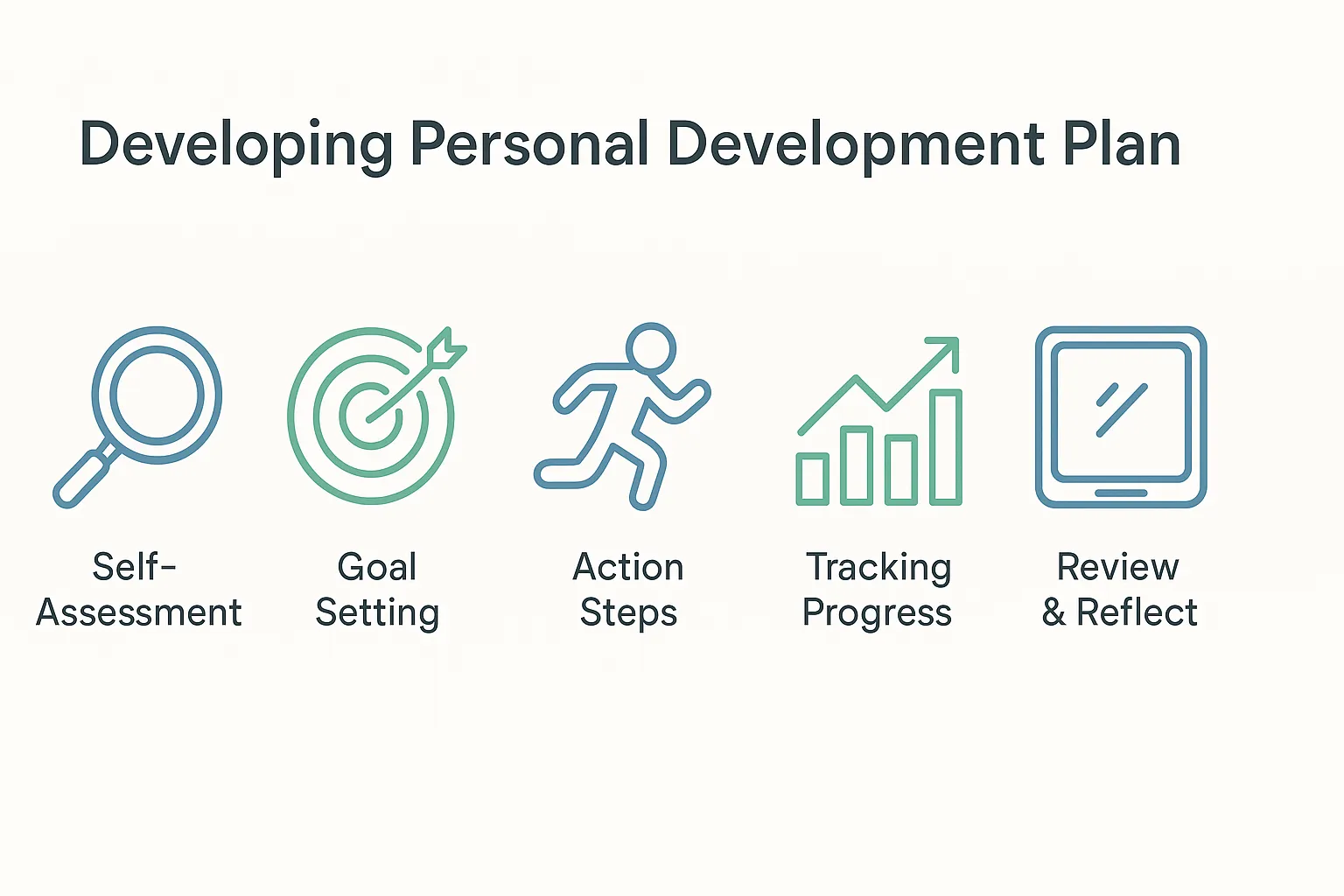
You may be asking, what is a personal development plan? Simply put, a personal development plan is a roadmap for your personal and professional growth. It outlines your goals, identifies your strengths and weaknesses, and sets a timeline for achieving your aspirations.
A good personal development plan is specific, actionable, and flexible. It helps you focus on your priorities and serves as a continual reminder of what you’re working toward.
Key Elements of a Personal Development Plan:
- Clear goals (short-term and long-term)
- Self-assessment of current skills and traits
- Actionable steps and strategies
- Timeline for completion
- Resources needed (books, mentors, courses)
- Regular review and revision
Why You Need a Personal Development Plan Template
Having a personal development plan template can save you hours of effort and provide a consistent structure for tracking your growth. Whether you prefer a digital format like a Notion doc or a printed journal, templates help you:
- Stay organized
- Break large goals into smaller tasks
- Track progress over time
- Reflect regularly on wins and challenges
You can find free templates online from MindTools, Smartsheet, or create your own from scratch.
Step-by-Step Guide to Developing Personal Development Plan
Let’s dive into the process of developing personal development plan from the ground up:
1. Conduct a Self-Assessment
Before you begin, ask yourself:
- What are my strengths?
- Where do I struggle?
- What areas of my life feel unbalanced?
Use SWOT (Strengths, Weaknesses, Opportunities, Threats) analysis to get clarity.
2. Set SMART Goals
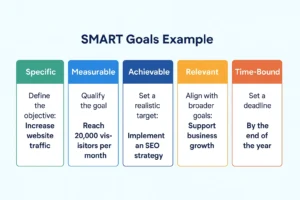
When developing personal development plan, your goals must be SMART:
- Specific: Define exactly what you want.
- Measurable: Set metrics for success.
- Achievable: Be realistic.
- Relevant: Align with your values.
- Time-bound: Assign deadlines.
3. Identify Required Skills and Knowledge
Whether you’re trying to become a better speaker or learn coding, outline the skills you need to grow.
4. Choose Resources and Tools
Examples:
- Online Courses (e.g., Coursera, Udemy)
- Books and Podcasts
- Mentors and Coaches
5. Create an Action Plan
Break goals into smaller tasks. For example:
- Goal: Improve communication skills
- Task 1: Read “Talk Like TED”
- Task 2: Join a local Toastmasters club
6. Set Milestones
Track your progress weekly or monthly with check-in points.
7. Reflect and Revise
Ask yourself:
- What’s working?
- What needs adjustment?
A flexible personal development plan evolves with your developing personal development plan.
How to Make a Personal Development Plan Work for You
Creating a plan is one thing. Making it work is another. Here are strategies to ensure success:
- Block out time each week for development
- Review your plan monthly
- Celebrate small wins to stay motivated
- Share your goals with a friend or mentor
Success in developing personal development plan depends on your commitment and consistency.
What Is the Personal Development Plan’s Role in Career Success?
The connection between your career and personal growth and development plan is powerful. Employers look for people who are proactive about self-improvement. Including a section on your personal development plan in a job interview or performance review can set you apart.
Benefits Include:
- Better time management
- Stronger leadership skills
- Improved emotional intelligence
- Higher job satisfaction
According to Harvard Business Review, individuals who regularly engage in personal development earn 23% more on average.
Real-Life Example: Developing Personal Development Plan in Action
Meet Sarah, 29, from Austin, TX.
Sarah wanted to transition from a customer service role into digital marketing. She started by developing personal development plan that included:
- Learning SEO via free Google courses
- Starting a blog to build her portfolio
- Networking through LinkedIn
Within six months, she landed a marketing coordinator role at a startup. Her secret? A structured and actionable plan.
Common Mistakes When Developing a Personal Development Plan
- Setting vague goals like “be better at time management”
- Lack of deadlines or measurement metrics
- Skipping reflection and not reviewing progress
- Ignoring work-life balance
Avoiding these pitfalls ensures your personal growth and development plan stays practical and effective.
Comparison Table: Traditional Goal-Setting vs. Personal Development Plan
| Feature | Traditional Goal-Setting | Personal Development Plan |
|---|---|---|
| Scope | Focused on outcomes | Holistic: includes skills, mindset |
| Structure | Often informal | Structured and time-bound |
| Accountability | Low | Built-in checkpoints and reflection |
| Adaptability | Rigid | Flexible and evolving |
| Motivation | Short-term | Long-term purpose-driven |
Free Personal Development Plan Template Sample (Text Version)
Name: ______________________
Date: ______________________

1. Goal Title: ______________________
2. Description: ______________________
3. Timeline: From ____ to ____
4. Skills Needed: ______________________
5. Resources: ______________________
6. Milestones:
   - [ ] Week 1:
   - [ ] Week 2:
   - [ ] Month 1:
7. Reflection Questions:
   - What did I learn?
   - What should I improve?
Insert an image of a filled-in personal development plan worksheet here
How Do I Create a Personal Development Plan That Lasts?
If you’re still wondering, how do I create a personal development plan that lasts, remember the following:
- Be honest in your self-assessment
- Make it personal, not just professional
- Check in with your goals every month
- Be flexible but committed
Digital Tools to Help You Stay on Track
- Notion: Create a dynamic personal development plan template
- Trello: Visualize goals with cards and deadlines
- Evernote: Reflect on progress with journal entries
- Google Calendar: Schedule learning blocks
Using tools helps make developing personal development plan more engaging and trackable.
How to Share Your Personal Development Plan Professionally
In job interviews or performance reviews, showing your personal development plan reflects:
- Growth mindset
- Commitment to improvement
- Strategic thinking
It’s a great addition to leadership development programs or mentorship meetings.
Developing Personal Development Plan for Students and Young Professionals
College students and entry-level professionals benefit immensely from early planning.
Focus Areas:
- Public speaking
- Time management
- Networking
- Resume building
- Interview preparation
Learning how to make a personal development plan early sets the tone for long-term career success.
Personal Growth and Development Plan for Mental Well-being
Don’t just focus on work. Your personal growth and development plan should include emotional and mental health goals too:
- Practicing mindfulness
- Journaling
- Setting boundaries
- Therapy or coaching sessions
Balance is the key to sustainable development.
Quick Tips for Sticking to Your Plan
- Use rewards: Celebrate small wins
- Accountability partner: Share progress
- Visual reminders: Use sticky notes or vision boards
- Break down goals into daily actions
✅ Top 15 Frequently Asked Questions About Developing Personal Development Plan
1. What is a personal development plan?
A personal development plan is a structured, strategic document designed to help individuals assess their current abilities, define personal and professional goals, and outline the steps needed to achieve them. Think of it as a personal roadmap—it lays out what you want to improve, learn, or change in your life, then provides clear guidance on how to get there.
If you’re asking what is a personal development plan, it’s a commitment to self-growth. It often includes skill-building, mindset shifts, goal setting, and accountability tracking. A solid plan enhances your confidence, focus, and direction in both career and life.
2. Why is developing personal development plan important in 2025?
Developing personal development plan is more critical than ever because we live in a world that changes rapidly. With job markets evolving and mental wellness gaining attention, having a personal development roadmap is essential for staying competitive and balanced.
In 2025, adaptability, continuous learning, and self-awareness are crucial for career growth. A personal growth and development plan helps individuals remain relevant, focused, and emotionally resilient. It equips you with tools to improve your career, relationships, and personal well-being.
3. What are the key components of a personal development plan?
A powerful personal development plan typically includes:
-
A self-assessment (SWOT analysis)
-
Clearly defined short- and long-term goals
-
A timeline for progress
-
Actionable steps
-
Required skills and knowledge
-
Resources (books, courses, mentors)
-
A system for tracking milestones and reflecting regularly
Whether you’re developing a personal development plan for career advancement or personal growth, these elements keep you accountable and focused.
4. How do I create a personal development plan that works?
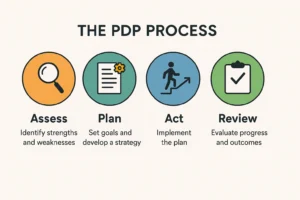
If you’re wondering how do I create a personal development plan, here’s a simple five-step approach:
-
Assess Your Current Situation: Reflect on your strengths, weaknesses, and goals.
-
Set SMART Goals: Make them Specific, Measurable, Achievable, Relevant, and Time-bound.
-
Break Goals into Tasks: Use a personal development plan template to organize these steps.
-
Use Tools: Leverage apps like Notion, Trello, or Evernote.
-
Track Progress and Adjust: Revisit your plan monthly and revise as needed.
Consistency, not perfection, is key in developing personal development plan that delivers results.
5. What are the benefits of using a personal development plan template?
A personal development plan template simplifies the process of organizing your goals and makes your plan easier to follow. Templates allow for:
-
Clear goal formatting
-
Task breakdowns
-
Built-in timelines
-
Checklists and reflection prompts
There are great free templates available on Smartsheet, MindTools, and Google Docs.
Using a template helps you focus more on developing a personal development plan and less on formatting.
6. How do I make sure my personal development plan stays relevant?
To keep your personal development plan aligned with your goals, follow these best practices:
-
Review it monthly
-
Reflect on achievements and setbacks
-
Adjust goals based on changes in life or work
-
Seek feedback from a mentor
Your personal growth and development plan should evolve with your needs. Make it a living document, not something static.
7. What’s the difference between a personal development plan and a career plan?
While both overlap, a personal development plan focuses on your holistic development—including mental health, habits, and relationships—whereas a career plan focuses specifically on your job-related goals.
You can think of your career goals as one branch of your broader personal growth and development plan. A well-rounded plan incorporates both for maximum impact.
8. How can students start developing personal development plan?
Students benefit immensely from starting early. Here are simple steps for developing personal development plan as a student:
-
Identify interests and passions
-
Set academic and soft skill goals
-
Join clubs or internships for experience
-
Learn time management and emotional resilience
-
Track milestones like GPA, achievements, or extracurriculars
The earlier you learn how to make a personal development plan, the easier it becomes to build lifelong habits.
9. What common mistakes should I avoid when developing a personal development plan?
Top mistakes to avoid:
-
Setting vague or unrealistic goals
-
Not scheduling reflection time
-
Skipping the self-assessment
-
Forgetting emotional or mental health goals
-
Trying to tackle too much at once
Avoid these, and your developing personal development plan process will be far more successful and sustainable.
10. How does developing a personal development plan help in job interviews?
Employers are impressed by candidates who demonstrate self-awareness and a commitment to growth. When you mention your personal development plan in an interview, it shows:
-
You have a growth mindset
-
You set and follow through on goals
-
You’re proactive about self-improvement
-
You’ve identified your career trajectory
This makes developing a personal development plan not just smart, but strategic for job seekers.
11. How do I align my personal development plan with my long-term goals?
Here’s how to make your personal development plan align with big-picture goals:
-
Identify where you want to be in 5 or 10 years.
-
Work backward to create smaller, achievable goals.
-
Use a personal development plan template to create timelines.
-
Break those down into monthly, weekly, or even daily actions.
By linking daily tasks to long-term aspirations, you’re more likely to stay motivated and on track.
12. Can I include personal life goals in my personal development plan?
Absolutely. A good personal development plan isn’t limited to your job or career. It should include:
-
Health and fitness
-
Emotional intelligence
-
Time with family or friends
-
Hobbies and passion projects
-
Mental wellness goals
Including personal areas ensures your personal growth and development plan leads to a more fulfilling and balanced life.
13. What digital tools can help me manage my personal development plan?
Top tools to support your developing personal development plan efforts include:
-
Notion: For organizing tasks and reflections
-
Trello: For visual project planning
-
Evernote: For journaling progress and ideas
-
Google Calendar: For scheduling action steps
-
Habitica: Gamifies habit tracking
These tools make it easier to implement and stay consistent with your plan.
14. How often should I update my personal development plan?
You should update your personal development plan at least once a month, with a full review every 3–6 months. During each update, ask developing personal development plan:
-
Have I achieved any milestones?
-
Do my goals still align with my priorities?
-
What’s working and what needs improvement?
Revisiting your plan regularly helps ensure that you’re not just developing personal development plan, but also executing it successfully.
15. Is there a difference between developing a personal development plan and self-help goals?
Yes. While self-help goals are often motivational or emotional, developing personal development plan is more structured and strategic. It involves reflection, goal-setting, and measurement.
Self-help might say, “I want to be happier.” A personal development plan says, “I will practice gratitude journaling every morning for 10 minutes.”
The difference lies in action, structure, and accountability to developing personal development plan.
Conclusion: Take Control by Developing Personal Development Plan Today
In a world that demands constant growth, developing personal development plan is one of the smartest investments you can make in yourself. It provides structure, clarity, and motivation to move forward in every area of life.
Whether you’re aiming for a career pivot, emotional resilience, or a stronger sense of purpose, learning how to create a developing personal development plan empowers you to become the best version of yourself.
So don’t wait. Start developing personal development plan today—your future self will thank you.
Looking for more inspiration on personal growth? Check out Echo Journal’s Personal Development and Productivity section for insightful articles to keep your momentum strong.