How to Make a Page Responsive: The Complete Guide for Modern Web Designers
Learning how to make a page responsive is one of the most important skills for anyone building websites today. People browse the internet on phones, tablets, laptops, TVs, and even smartwatches — and each device demands a layout that adjusts beautifully. A responsive design is no longer a luxury; it’s a core requirement for user experience, SEO, and professional credibility. In this comprehensive guide, you’ll learn exactly how to make a page responsive step-by-step, backed by real techniques used by expert developers worldwide.
Why Learning How to Make a Page Responsive Matters More Than Ever
The moment you understand how to make a page responsive, you unlock the ability to serve seamless experiences across all devices. With Google’s mobile-first indexing, responsive web design is a major ranking factor. That means your website cannot perform well in search unless it adapts perfectly to different screen sizes. Understanding what does responsive design mean helps you make sites load faster, look cleaner, and feel intuitive across every device.
Whether you are learning how to make a web page responsive for personal projects or client websites, the principles of responsive design remain the same. You’ll explore responsive interface development, CSS techniques, real responsive website examples, and practical steps that show you how to make responsive web design without confusion. These foundations will help you build websites that look professional, adapt intelligently, and meet modern web standards.
Many beginners ask questions like: How can I make responsive website layouts quickly? or What is responsive and why do developers need it? By the end of this article, you’ll fully understand the logic behind how to make a page responsive and apply it confidently with real-world examples.
The Basics: What Does Responsive Website Mean?
Before you learn how to make a page responsive, you must know exactly what does responsive website mean and why it matters. A responsive site is one that automatically adjusts its layout, text, images, and interface depending on the user’s screen size. It doesn’t stretch, break, or look cluttered. Instead, it flows naturally, offering the same usability on every device. This is the foundation of modern responsive design.
Understanding what is responsive helps you structure your layout using flexible units like percentages, viewport widths, scalable images, and grid-based systems. These principles influence every part of responsive web design, from navigation and spacing to typography and image scaling. Mastering the basics ensures you create layouts that feel natural no matter the device.
Professional developers often refer to responsive design sample demos or responsive web design examples to refine their technique. This is why knowing how to make responsive layouts is essential for anyone working in web development or UI/UX roles.
Core Principles: How to Make a Page Responsive Using Flexible Layouts
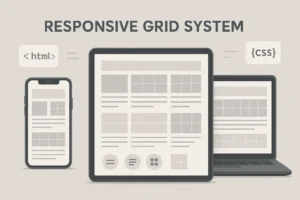
When learning how to make a page responsive, one of the first principles is replacing fixed-width designs with flexible grids. This ensures your content adjusts as the device width changes. A grid-based system, such as CSS Grid or Flexbox, allows content blocks to resize, reposition, or stack depending on available space. This is a major step in responsive interface development.
A beginner-friendly way to understand responsive website examples is to study frameworks like Bootstrap or Tailwind CSS. These frameworks are built around flexibility, making it easier to learn how to create responsive website layouts from scratch. However, even without frameworks, plain CSS can achieve excellent results.
Developers often wonder how to create a responsive web page without overcomplicating the process. The answer lies in mastering fluid containers, flexible images, and media queries. Applied together, these tools transform any static website into a responsive web application that feels modern and adaptable.
Media Queries: The Heart of Responsive Design
One of the most powerful tools in learning how to make a page responsive is using CSS media queries. These allow you to apply different styling rules depending on the user’s screen size. They bring logic and structure to responsive site example layouts and make it possible to fine-tune designs for specific breakpoints.
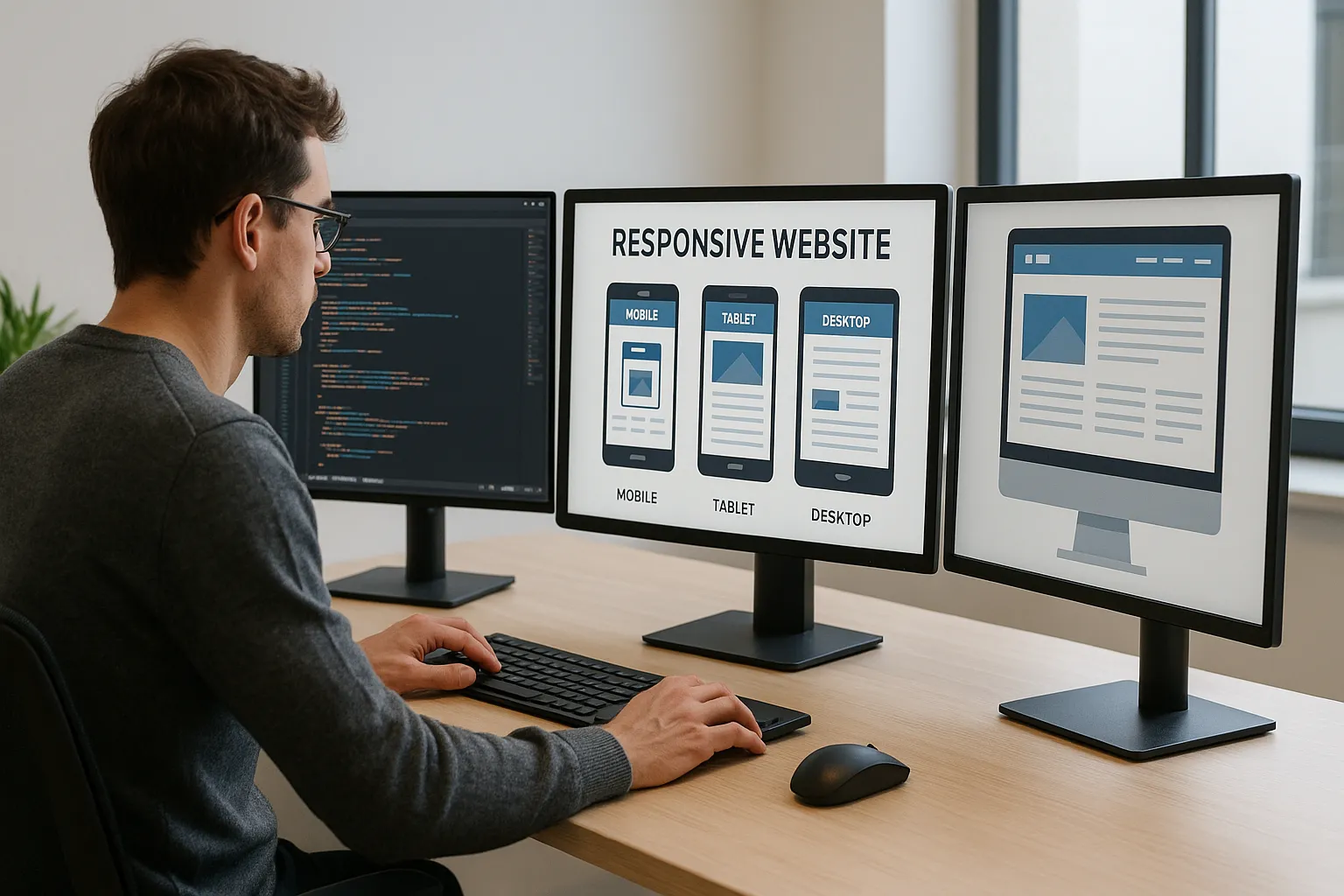
Understanding how to make responsive design means knowing how to choose breakpoints that match real devices: mobile, tablet, and desktop. Instead of guessing, many developers reference responsive web design examples and examine CSS breakpoints used by major websites.
Media queries help you control text size, padding, alignment, and layout adjustments. This ensures that learning how to code responsive website becomes much easier once you grasp this essential technique. Below is a simple structured table summarising the most common breakpoints used in responsive design.
| Device Type | Breakpoint Range |
|---|---|
| Mobile Devices | 320px – 480px |
| Tablets | 481px – 768px |
| Small Laptops | 769px – 1024px |
| Desktops | 1025px and above |
Practical Techniques: How to Make a Page Responsive Using Modern CSS
Once you master the principles, the next step is applying real techniques to learn how to make a page responsive. These techniques include fluid grids, flexible images, and relative units such as %, vw, and rem. For beginners asking how can I make responsive website layouts?, this section provides actionable steps.
One common element of responsive web design is ensuring images adapt to container widths. Setting images to max-width: 100%; ensures they scale down automatically. This is essential for anyone learning how to develop responsive website layouts that look professional and polished on any device.
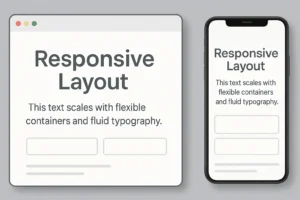
Another factor is typography. Responsive text scales based on screen width using units like vw. Understanding this is key to mastering how to create a responsive site that remains readable and clean. Whether you’re studying a responsive sample or working through your own project, flexible text is essential.
Navigation: How to Make a Page Responsive by Restructuring Menus
Responsive navigation often makes or breaks the mobile experience. You can’t fully understand how to make a page responsive without learning how to build mobile-friendly menus. Desktop menus typically spread horizontally across the top of the layout, but on phones, space is limited.
When learning how to make responsive website design, many developers switch to hamburger menus or collapsible menus. This ensures the navigation remains accessible without overwhelming the layout. This technique is visible in nearly every responsive page example you’ll find online.
Even major companies use this technique. You can study responsive web design examples from sites like:
Testing and Debugging: How to Make a Page Responsive Reliably
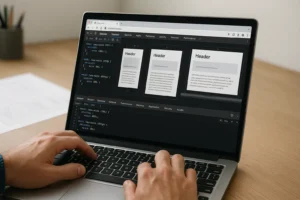
Knowing how to make a page responsive also requires understanding how to test your site on different devices. Fortunately, tools such as Google Chrome DevTools make it easy to preview your layouts in multiple screen sizes. These tools help you verify whether you have implemented responsive design correctly.
Testing is crucial, especially when examining responsive website examples. You’ll see how spacing, alignment, and content structure change across devices. This hands-on study helps you refine your understanding of how to make responsive web design decisions that look balanced and natural.
Debugging also ensures accessibility and usability. It’s not enough to know how to create responsive website structures—you must ensure they work for real users. That is the true purpose of responsive design.
Advanced Methods: How to Make a Page Responsive for Professional-Level Websites
As you grow more confident in how to make a page responsive, you may explore advanced methods such as container queries, clamp-based typography, and responsive component design. These advanced tools give you more control over layout decisions without relying heavily on device-based breakpoints.
Modern web development increasingly focuses on component responsiveness — ensuring individual parts of a layout resize independently. This approach is becoming standard in responsive web application environments. It is a major step forward for developers who want to master responsive design fully.
Additionally, exploring responsive web design sample templates and responsive design example projects helps you refine your craft. These real-world examples demonstrate how professional developers solve layout complexity while maintaining elegance and usability.
If you want to read more Amazing Articles like this, Click Here.
Frequently Asked Questions About How to Make a Page Responsive
1. What does responsive design mean, and why is it essential for modern websites?
Responsive design means creating a website layout that automatically adapts to different screen sizes and devices. When you learn how to make a page responsive, you ensure that your website looks good whether someone views it on a phone, tablet, laptop, or widescreen monitor. This adaptability improves user experience, boosts SEO performance, and increases audience trust. Many people today browse primarily on mobile devices, so knowing what does responsive design mean is critical for anyone building a professional site.
A responsive interface adjusts text, images, navigation menus, spacing, and content structure without breaking layout flow. This is the core of responsive web design. Not only does it improve visual consistency, but it also ensures faster page loading because unnecessary elements can be hidden or resized. Real responsive web design examples such as Apple, Airbnb, and Google demonstrate how seamless layouts should behave across devices. Understanding what is responsive allows you to build future-friendly, accessible websites that meet modern user standards.
In short, responsive design allows your website to scale and adjust intelligently, offering a polished experience to everyone. Without mastering how to make a page responsive, you risk losing visitors, lowering conversions, and falling behind digitally.
2. How do I start learning how to make a page responsive as a beginner?
Beginners often feel overwhelmed when trying to understand how to make a page responsive, but the truth is that foundational techniques are easy to learn. Start by understanding flexible layouts using CSS Grid or Flexbox. These tools provide structure and ensure content adapts naturally as the screen size changes. Once you study responsive website examples, you’ll begin to see repeated patterns in layout design.
The next key skill is learning media queries. These are CSS rules that apply different styles depending on the device width. They are the cornerstone of how to make responsive design work across real screens. For example, a three-column layout on desktop might collapse into one column on mobile using simple media queries. This is exactly what you see in nearly every responsive site example online.
Finally, practice by studying a responsive web design sample and replicate it. Understanding how can I make responsive website layouts becomes much easier once you learn to adjust containers, typography, and images using flexible units like %, vw, and rem. With consistent practice, you’ll quickly learn how to make a web page responsive in professional-quality ways.
3. How do media queries help in responsive web design?
Media queries are vital when learning how to make a page responsive because they control how your site behaves on different screen sizes. A media query acts as a conditional rule: “If the screen is less than 768px wide, apply these styles.” This flexibility makes responsive web design powerful. You can tailor spacing, font size, layout structure, and image scaling for mobile devices without affecting the desktop layout.
Understanding how to make responsive web design requires mastering breakpoints—specific device width ranges where design changes occur. When you browse responsive web design examples, you’ll notice consistent breakpoints such as 480px for mobile, 768px for tablets, and 1024px for small laptops. These ranges help developers organise styling logic intelligently.
Media queries also ensure that responsive interface development doesn’t rely on rigid assumptions. Instead, the website reacts dynamically. This is why they are essential to professionals learning how to develop responsive website layouts. Without media queries, achieving responsive design across multiple devices would be nearly impossible.
4. What tools can help me understand how to make a page responsive?
Several tools simplify learning how to make a page responsive. Chrome DevTools is the most popular because it allows you to preview websites in different screen sizes. You can toggle between devices, inspect elements, and simulate mobile interactions. This helps you see how responsive web design works in real time.
Another useful tool is online responsive testing platforms like Responsinator, BrowserStack, and Screenfly. These tools offer realistic device simulations so you can test responsive web application behaviour. They are especially valuable when exploring responsive website examples built by professionals.
If you need design structure guidance, frameworks like Bootstrap or Tailwind include pre-built responsive classes. These are helpful if you’re still mastering how to create responsive website layouts from scratch. Learning from a responsive sample or a responsive design example created with such frameworks will boost your understanding. These tools remove guesswork and help you become confident with how to make responsive website design.
5. Why do images often break layouts, and how can I make them responsive?
Images frequently cause layout issues for beginners learning how to make a page responsive because they come with fixed widths by default. When the container shrinks on smaller devices, the image may overflow or distort. The solution is simple: apply max-width: 100% to make images scale within their containers. This is the foundation of responsive design for multimedia elements.
Another technique is using srcset attributes in HTML to serve different image sizes depending on screen resolution. This reduces load times and ensures the image fits perfectly. You will see this technique applied in advanced responsive web design examples such as e-commerce product galleries and portfolio websites.
Understanding how to create a responsive web page involves learning how images and videos scale proportionally. When exploring a responsive page example, notice how images shrink elegantly without losing quality. Responsive images also improve SEO because they reduce data usage and load-time delays. Mastering image scaling is essential for anyone learning how to make responsive interfaces.
6. What is the best layout approach for responsive website development?
The most recommended layout methods when learning how to make a page responsive are Flexbox and CSS Grid. Flexbox excels at one-dimensional layouts like navigation bars, sidebars, and inline groups. CSS Grid is ideal for two-dimensional layouts such as complex multi-column sections, feature blocks, or gallery-style arrangements.
These systems make understanding responsive design much easier because they replace outdated float-based layouts. When studying responsive website examples, you’ll notice that modern developers rely heavily on Flexbox and Grid for elegant arrangement control. They provide better spacing behaviour and allow for mobile-first design flow.
If you’re exploring how to create a responsive site from scratch, begin with a mobile-first approach. This means designing the smallest screen first and scaling upward using media queries. This method ensures clean layouts and reduces breakpoints. Every responsive design sample worth studying demonstrates this structure. With practice, you’ll become confident in how to code responsive website layouts that work intuitively.
7. How do I choose correct breakpoints for responsive design?
Choosing breakpoints is a big part of learning how to make a page responsive. Breakpoints should not be selected randomly; instead, they should reflect common device widths or natural layout adjustment points. For example, when your content begins to look squeezed, that’s usually a good place for a breakpoint.
Common breakpoints include: — 480px for small mobile — 768px for tablets — 1024px for small laptops — 1280px for desktops
These values show up repeatedly across responsive web design examples. However, modern responsive interface development suggests designing mobile-first and adjusting only when necessary. By studying any responsive site example, you’ll see breakpoints introduced at logical layout shifts, not arbitrary pixel values.
You can also examine responsive web design sample templates online. Look at when and how the layout changes. This will help you understand how to make responsive website design efficiently.
8. What is the difference between adaptive and responsive design?
Many beginners confuse adaptive design with responsive design while learning how to make a page responsive. Responsive design uses flexible layouts that adjust fluidly across all screen widths. Adaptive design uses fixed layouts crafted for specific device widths. With adaptive design, you create separate templates — for example, one for mobile and one for desktop.
Responsive design is more modern because it’s device-agnostic. It ensures your site works even on new screen sizes that didn’t exist when you built the website. Most responsive web design examples today use fully fluid layouts that stretch and compress naturally. When understanding what does responsive website mean, this distinction helps you choose the right method.
Adaptive layouts are still useful in certain controlled environments, but most developers prefer responsive layouts because they provide better performance, flexibility, and long-term relevance. This is why learning how to make a web page responsive remains the priority for modern developers.
9. How can I test whether my website is truly responsive?
Testing is essential for anyone learning how to make a page responsive. The quickest method is using Chrome DevTools’ device toolbar. It simulates multiple phones, tablets, and desktop resolutions. You can rotate screens, zoom, inspect elements, and test touch interactions. This is extremely helpful while studying responsive website examples for comparison.
You can also use live device testing by checking your site on an actual phone or tablet. This ensures your responsive design responds correctly to touch gestures, scroll behaviour, and orientation changes. Tools like BrowserStack offer virtual access to hundreds of devices, ideal for professionals learning how to develop responsive website layouts across environments.
Another technique is resizing your browser window manually. Watching your layout shift in real time will help you understand how to make responsive decisions more clearly. Regular testing ensures your website behaves naturally and matches standards seen in responsive page example websites.
10. How does responsive design affect SEO and performance?
Search engines prioritise mobile-friendly websites, making it crucial to understand how to make a page responsive. Google uses mobile-first indexing, meaning the mobile version of your site is evaluated before the desktop version. A non-responsive website can lead to lower rankings, slower indexing, and reduced organic traffic.
Responsive design improves load times by removing unnecessary elements, scaling images, and simplifying layouts. Sites that follow strong responsive web design practices often load faster and use fewer resources. This contributes significantly to improved Core Web Vitals scores, which directly affect SEO.
When examining responsive design example websites from top brands, you’ll see a direct connection between mobile performance and search visibility. Understanding how to make responsive website design not only enhances user experience but also improves your website’s overall performance and ranking potential.
11. Can I make an old website responsive without rebuilding it?
Yes — and learning how to make a page responsive is especially valuable when modernising older sites. While a complete redesign may be ideal, you can still upgrade responsiveness through targeted changes. Start by adding a responsive meta viewport tag to control how the page scales on mobile devices. This simple step begins the process of making a responsive web application without rebuilding everything.
Next, restructure outdated fixed-width containers into flexible ones using percentages or viewport-based units. Replace old tables and float-based layouts with Flexbox or Grid. Making images flexible with max-width: 100% is another effective improvement. These techniques align with modern responsive design standards.
You can follow a responsive sample or study responsive web design examples to see how layout patterns should behave. If you’re asking how to create responsive website behaviour without rewriting the entire site, incremental updates like these offer a practical solution.
12. Why does mobile-first design make creating responsive layouts easier?
Mobile-first design simplifies learning how to make a page responsive because it forces you to create compact, efficient layouts. When you design for the smallest device first, you ensure clarity and usability. Then, using media queries, you add enhancements for larger screens. This approach reduces complexity and aligns with the principles seen in most responsive website examples.
It’s much harder to shrink a desktop layout into a mobile-friendly one. Too many elements must be removed, rearranged, or hidden. Designing mobile-first avoids this problem. You start with a clean structure and build upward. It is a standard technique in responsive interface development.
If you study any responsive web design sample, you’ll notice that mobile-first CSS flows naturally and uses fewer breakpoints. This method produces cleaner code and makes how to make responsive website design far easier, especially for beginners.
13. How can CSS Grid help me create more advanced responsive layouts?
CSS Grid is one of the most powerful tools for learning how to make a page responsive. It allows you to create complex layouts that adjust intelligently to screen width changes. Unlike Flexbox, which manages content in a single direction, Grid handles two-dimensional structures — both rows and columns — simultaneously.
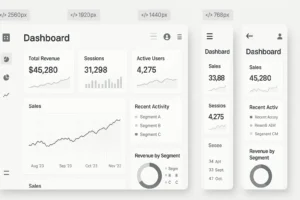
Professional developers use Grid heavily in responsive web design examples for landing pages, galleries, and dashboard interfaces. With Grid, you can define flexible columns using fr units, making layouts adapt smoothly. When combined with media queries, Grid becomes an excellent system for how to create a responsive web page that remains visually appealing on all screen sizes.
If you’re looking to create a responsive site example with modern design patterns, Grid will be your best tool. Its flexibility ensures your layout remains clean, balanced, and scalable — essential qualities in modern responsive design.
14. What are common mistakes beginners make when trying to make a page responsive?
Beginners often struggle with how to make a page responsive because they rely too much on fixed widths. Using pixel-based measurements instead of fluid units can cause layouts to break on smaller screens. Another mistake is skipping testing. You cannot assume your layout works across all devices without checking it thoroughly.
Neglecting typography scaling is also common. Text too large or too small can ruin user experience. This is why learning how to make responsive design includes using units such as rem or vw to scale text smoothly. Poor image handling is another widespread mistake. Without max-width: 100%, images will distort layout flow.
Beginners also forget to simplify navigation for mobile screens, which is essential when studying responsive page example sites. By learning through examples and correcting these errors, anyone can become proficient in how to create responsive website layouts.
15. How long does it take to learn how to make a page responsive?
The time required to learn how to make a page responsive depends on your starting point. With daily practice, most beginners can understand the fundamentals within a week: flexible containers, media queries, and responsive images. To build professional-quality layouts, expect to practice for several weeks.
Mastering advanced concepts such as mobile-first design, CSS Grid, responsive typography, and component-based layouts can take a few months. Studying responsive website examples accelerates learning because it exposes you to real-world solutions. Reviewing a responsive design sample and replicating it is one of the fastest ways to improve.
By consistently practising how to make responsive interfaces and examining real responsive design patterns, you will gradually build the expertise needed to create highly polished, user-friendly websites.
Final Takeaway
Mastering how to make a page responsive is not just a technical skill — it’s the foundation of modern digital experiences. Every visitor deserves a smooth, beautiful, and accessible website, no matter what device they use. By applying responsive web design techniques, testing consistently, and learning from real examples, you’ll create websites that are flexible, powerful, and future-proof. Every step you take toward responsiveness is a step toward professional-quality web design.